Whitefield vs Electronic City 2026
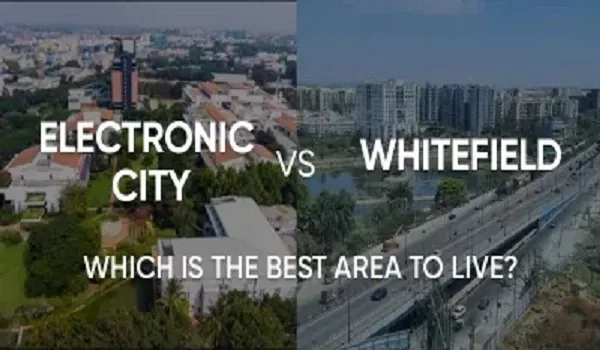
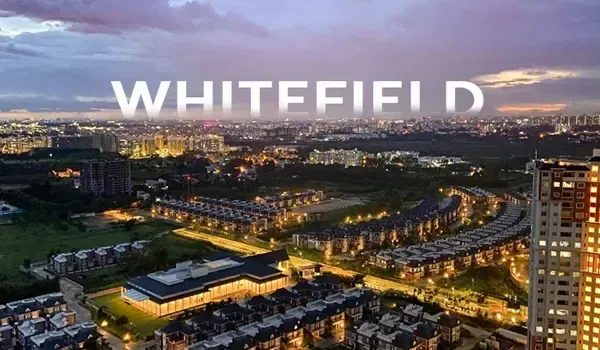
Whitefield and Electronic City are Bangalore's two largest IT employment corridors, and in 2026 both are active residential real estate markets drawing buyers from across India. Whitefield, in East Bangalore at the junction of Outer Ring Road and the old Mysore Road extension, is the city's mature premium IT belt — anchored by ITPB, EPIP Zone and RMZ Ecoworld — with an indicative average residential rate of approximately ₹11,900 per sq ft. Electronic City, on Hosur Road in South Bangalore, is the affordable counterpart: anchored by Infosys, Wipro, HCL and Tech Mahindra campuses, with an indicative average residential rate of approximately ₹5,900 per sq ft, roughly half the Whitefield level. The gap between the two is not simply a price gap — it reflects a difference in market maturity, social infrastructure, connectivity and remaining appreciation runway.
This guide compares the two corridors across price, metro connectivity, employment anchors, rental demand, appreciation outlook and lifestyle infrastructure, so that a buyer or investor in 2026 can make an informed, goals-driven decision between them.
Whitefield vs Electronic City at a Glance
The table below summarises the key parameters side by side for a quick reference before diving into each dimension in detail.
| Parameter | Whitefield | Electronic City |
|---|---|---|
| Avg residential price / sq ft | ~₹11,900 (indicative) | ~₹5,900 (indicative) |
| Location | East Bangalore, Outer Ring Road junction | South Bangalore, Hosur Road |
| Metro line | Purple Line (Kadugodi station) | Yellow Line (Silk Board junction area) |
| Key employers / anchors | ITPB, EPIP Zone, RMZ Ecoworld, Brigade Tech Park | Infosys, Wipro, HCL, Tech Mahindra campuses |
| Social infrastructure maturity | Established — malls, hospitals, schools, restaurants | Developing — improving but still catching up |
| Appreciation outlook | Stable; ~98% already delivered over ~5 years | Higher headroom from lower base; fresh connectivity |
| Rental demand | Strong; premium tenants, GCC workforce | Strong; year-round IT campus workforce |
| Indicative rental yield | ~3.5–4.5% | ~3.5–4.5% |
| Best suited for | Premium living + established infra + stable appreciation | Affordability + fresh connectivity + higher upside |
All figures are indicative for 2026 and vary by project, micro-location within each corridor and prevailing market conditions. Engage a registered real estate adviser and verify current rates before taking any investment decision.
Price & Affordability
The most immediate difference between the two corridors is entry price. At an indicative average of approximately ₹11,900 per sq ft, Whitefield commands a significant premium over Electronic City's approximately ₹5,900 per sq ft. On a typical 1,200 sq ft apartment, that gap translates to a difference of roughly ₹72 lakh in total outlay — a material sum for any buyer at any stage of their property journey.
Whitefield's premium reflects what the market has already priced in: deep social infrastructure, an established residential community, a prestigious IT belt address and consistent demand from a high-income GCC and IT workforce over nearly two decades. Electronic City's lower rate is not a discount on a comparable product — it reflects an earlier stage of urban maturation. Buyers in Electronic City are, in effect, paying for the corridor as it stands today and betting on continued improvements in infrastructure, connectivity and social amenities to drive future value.
For budget-constrained buyers, Electronic City opens up Bangalore's IT belt at a far more accessible price point and delivers the largest quantum of floor area per rupee spent. For buyers who want to occupy a fully formed neighbourhood from day one — with established schools, hospitals and retail within close reach — Whitefield's premium is broadly justified by what already exists.
Connectivity & Commute
Both corridors have crossed a connectivity threshold in 2026 that significantly changes their commuting proposition. Whitefield is served by the Namma Metro Purple Line, with Kadugodi station at the eastern terminus connecting through Byappanahalli to central Bangalore and onward westward. For office workers in ITPB and Brigade Tech Park, this eliminates the historically painful Outer Ring Road congestion that once defined Whitefield living and limited its appeal to buyers without a personal vehicle.
Electronic City is served by the Yellow Line, which provides connectivity via the Silk Board junction area toward central Bangalore. The Yellow Line has substantially eased what was one of Bangalore's worst bottlenecks — the Hosur Road – Silk Board stretch — and has made Electronic City considerably more attractive as a residential destination for workers who previously found the commute prohibitive. Improved road infrastructure on the Hosur Road corridor has complemented the metro extension in reducing overall travel times.
In 2026, neither corridor holds a decisive connectivity advantage over the other. The practical commute experience depends on where in each corridor a resident lives relative to the nearest metro station and the quality of last-mile options available. Road-based connectivity remains relevant in both micro-markets, particularly for workers commuting to campuses set back from the metro alignment.
Employment & Rental Demand
Both corridors are anchored by large, stable IT employers, which underpins year-round residential rental demand. Whitefield's employment base spans over 100 GCCs (Global Capability Centres) and major IT services firms across ITPB, EPIP Zone, RMZ Ecoworld and Brigade Tech Park, drawing a high-income workforce that fuels demand for premium and mid-premium apartments. The GCC workforce tends to be senior, well-compensated and willing to pay for quality housing within a short commute of the campus.
Electronic City's employment base is anchored by some of India's largest and most recognisable IT companies — Infosys, Wipro, HCL and Tech Mahindra — which together employ tens of thousands of engineers and IT professionals. The scale of this workforce creates very high absolute rental demand, and because these campuses operate large, multi-shift operations, demand is consistent through the year rather than subject to seasonal fluctuation. The workforce profile skews somewhat younger and more mid-level than Whitefield's GCC community, which is reflected in the type and price bracket of housing that sees the strongest rental take-up.
Indicative residential rental yields in both corridors are broadly similar at approximately 3.5–4.5%. Electronic City's lower absolute rents are offset by its lower capital values, producing comparable percentage yields. Whitefield commands higher absolute monthly rentals but from a higher capital base. For an investor focused on yield as a percentage of capital deployed, the two corridors are broadly equivalent; for one focused on absolute rental cash flows, Whitefield's rents are higher in rupee terms.
Appreciation & Investment Outlook
Whitefield has been one of Bangalore's strongest performing residential markets over the past five years, delivering indicative appreciation of approximately 98% over that period. Much of this run has already occurred, and the market in 2026 is at a mature stage where prices are underpinned by solid fundamentals — GCC demand, metro connectivity and established social infrastructure — but the steep percentage gains of the early and mid cycle are unlikely to repeat at the same pace in the near term. Whitefield in 2026 offers stable, steady appreciation rather than explosive growth; it is the kind of market that preserves and grows capital reliably over time.
Electronic City presents a different investment narrative. Starting from a lower base of approximately ₹5,900 per sq ft, the corridor has more remaining appreciation headroom. As the Yellow Line metro embeds itself into everyday commuting habits, as social infrastructure matures and as the large IT workforce generates more consumer demand within the micro-market, Electronic City's residential prices are broadly expected to appreciate at a faster percentage rate than Whitefield's over the medium term — though this is not guaranteed and is subject to new supply, macro conditions and the pace of infrastructure delivery. Investors with a longer hold horizon and tolerance for a slightly less mature environment may find Electronic City more attractive on a capital appreciation basis.
In both corridors, appreciation is underpinned by structural employment anchors rather than speculative demand, which reduces the tail-risk typical of markets without a stable occupier base. The choice between stable premium appreciation in a mature market (Whitefield) and higher-upside emerging-corridor growth (Electronic City) is ultimately a risk-return and budget preference.
Which Should You Choose?
The right corridor depends on your goals, budget and timeline. Here is a practical framing to guide the decision.
Choose Whitefield if: you want to live in a fully formed neighbourhood with established schools, hospitals, malls and restaurants from day one; if you work in or near the ITPB, EPIP Zone, RMZ Ecoworld or Brigade Tech Park cluster; if you are an end-user who values lifestyle quality over price optimisation; or if you are an investor who wants stable, predictable appreciation with strong tenant demand from a premium GCC and IT workforce.
Choose Electronic City if: affordability is a primary consideration and you want entry into Bangalore's IT belt at roughly half the per-sq-ft cost of Whitefield; if you work at or near the Infosys, Wipro, HCL or Tech Mahindra campuses on Hosur Road; if you are an investor prioritising capital appreciation from a lower base and are comfortable holding through the corridor's continuing maturation; or if you are a first-time buyer seeking the largest possible space for a given budget within a major IT micro-market.
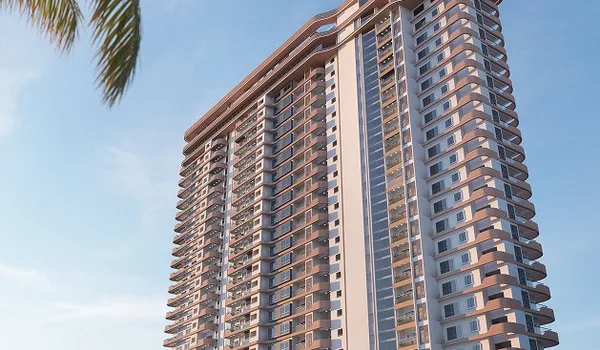
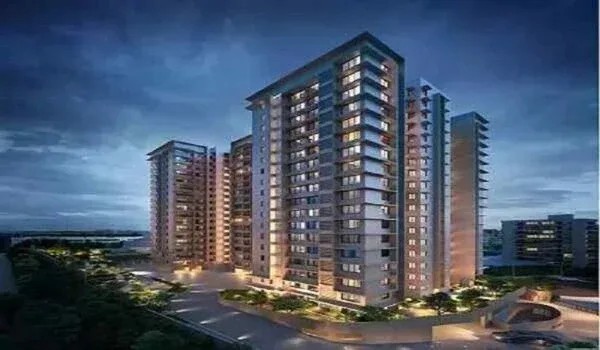
Buyers who have decided on a premium Whitefield address can explore Godrej Whitefield, a pre-launch residential apartment project by Godrej Properties on the Whitefield IT belt, as one of the new-launch options currently available in the corridor.
Frequently Asked Questions
1. Is Whitefield or Electronic City cheaper?
Electronic City is considerably cheaper. Indicative average residential prices in Whitefield stand at approximately ₹11,900 per sq ft, while Electronic City averages approximately ₹5,900 per sq ft — roughly half the Whitefield level. The price gap reflects differences in market maturity, social infrastructure and the premium that Whitefield's established IT belt address commands.
2. Which has better metro connectivity — Whitefield or Electronic City?
Both corridors now have metro connectivity. Whitefield is served by the Purple Line (Kadugodi station), connecting it through Byappanahalli to central Bangalore. Electronic City is served by the Yellow Line (via the Silk Board junction area), which has significantly eased the historically congested Hosur Road commute. Neither holds a decisive connectivity advantage in 2026; the practical impact depends on where in each corridor a resident or worker is located relative to the nearest metro station.
3. Which is better for rental income — Whitefield or Electronic City?
Both corridors offer indicative residential rental yields of approximately 3.5–4.5%. Electronic City benefits from year-round, high-volume demand from the large IT workforce at Infosys, Wipro, HCL and Tech Mahindra campuses. Whitefield commands higher absolute monthly rents due to its premium pricing, but yields as a percentage of capital deployed are broadly similar across the two corridors. Investors focused on percentage yield will find both broadly equivalent; those focused on absolute cash flows will find Whitefield's rents higher in rupee terms.
4. Which area appreciates faster — Whitefield or Electronic City?
Whitefield has delivered strong historical appreciation — indicatively around 98% over approximately five years — but much of that run has already occurred, pointing to more stable, moderate growth ahead. Electronic City, starting from a lower base, is generally viewed as having greater remaining appreciation headroom, particularly as metro connectivity and social infrastructure continue to improve. However, appreciation in any corridor is never guaranteed and depends on supply, demand and broader market conditions at the time of investment.
5. Is Whitefield worth the premium over Electronic City?
For buyers prioritising lifestyle — established malls, schools, hospitals and a mature residential community — Whitefield's premium is broadly justified by what already exists on the ground. For buyers where affordability and future appreciation upside are the primary goals, Electronic City offers a compelling entry point at roughly half the price per sq ft. Whether the premium is worth it is a personal decision that depends on budget, intended use and investment horizon.
6. Which is better for an end-user vs an investor?
End-users who want to live in a fully formed neighbourhood with strong social infrastructure and a recognised IT belt address generally find Whitefield a better fit. Investors seeking capital appreciation from a lower base, with exposure to a large and growing IT workforce, often find Electronic City more attractive from a value-entry perspective. Investors focused on stable income in a premium market may prefer Whitefield. In both cases, the right choice depends on budget, timeline and overall portfolio objectives.
Conclusion
Whitefield and Electronic City are two of Bangalore's strongest residential investment destinations in 2026, each with a distinct value proposition. Whitefield offers a premium, mature market with established social infrastructure, strong GCC-driven rental demand and stable appreciation underpinned by the Purple Line metro and decades of IT corridor development — at an indicative ~₹11,900 per sq ft. Electronic City offers an affordable entry into Bangalore's IT belt at ~₹5,900 per sq ft, with the Yellow Line metro improving connectivity, a massive IT workforce driving year-round rental demand from Infosys, Wipro, HCL and Tech Mahindra campuses, and greater appreciation headroom from its lower base. The right choice is determined by your goals: Whitefield for premium living and stable appreciation; Electronic City for affordability and higher upside potential. To explore opportunities in the Whitefield corridor and discuss which option suits your specific goals, contact us here.
Godrej Whitefield Blog
More Whitefield project and market guides.