Bangalore Property Price Trends 2026
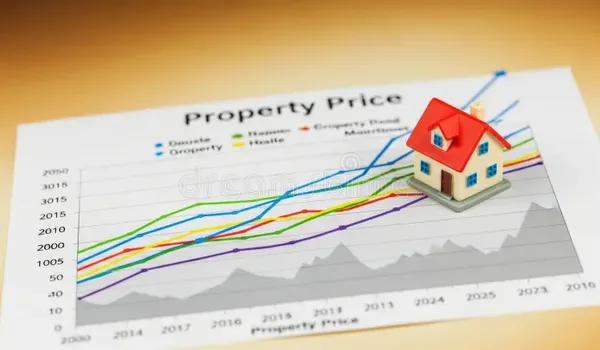
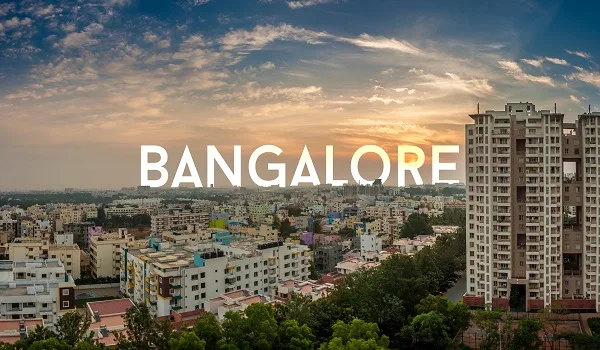
Bangalore residential property prices averaged ~₹12,100 per sq ft in early-to-mid 2026, up ~14% year-on-year, with citywide asking rates spanning a broad band from ~₹4,650 to ₹18,500+ per sq ft depending on zone, project type and micro-location. East Bangalore — anchored by the Whitefield, ITPL and Sarjapur-ORR belt — leads all four city zones in average rate (₹13,000–₹13,750 per sq ft) and transaction volume, driven by concentrated IT and GCC employment. This guide maps the zone-wise price landscape across East, North, South and Central Bangalore, explains the structural drivers shaping appreciation, and helps buyers and investors navigate the city's most significant residential market of 2026.
Bangalore Property Market Overview 2026
Bangalore's residential market has sustained a multi-year demand cycle, with the 2024–2026 period marking a pronounced phase of price discovery. The citywide average of ~₹12,100 per sq ft reflects the aggregated weight of a market that spans affordable plotted developments on the city's periphery, mid-segment apartment launches in North and South Bangalore, and premium large-format residential towers in East and Central Bangalore. A ~14% year-on-year gain at the citywide level is among the highest recorded in any comparable period for the city, and it is broadly distributed across zones rather than concentrated in a single corridor. Supply absorption has kept pace with new launches, and inventory overhangs that characterised the 2016–2019 period have been progressively cleared.
Three structural forces underpin the current cycle. First, Bangalore's IT and GCC employment base continues to expand at scale: India's position as a cost-competitive, high-skill technology hub has made the city the preferred location for multinational Global Capability Centres, driving sustained white-collar job creation and housing demand. Second, metro network expansion and ORR/PRR road infrastructure improvements have extended the practical radius of premium-priced micro-markets, allowing buyers to access connectivity-backed addresses at price points below the most established corridors. Third, a constrained supply of ready-to-move inventory in high-demand zones — combined with strong pre-launch absorption — has kept price discovery tilted upward across multiple sub-markets simultaneously.
The table below summarises indicative average asking rates by zone in 2026. Detailed zone commentary follows.
| Zone | Avg Rate 2026 (per sq ft) | Trend / Key Driver |
|---|---|---|
| East Bangalore | ~₹13,000–₹13,750 | Most active zone; IT/GCC belt — Whitefield, ITPL, Sarjapur-ORR; metro-adjacent towers ₹15,000+ |
| North Bangalore | ~₹11,150 | Airport corridor, Manyata Tech Park (Hebbal/Thanisandra); Devanahalli sub-market lower-entry |
| South Bangalore | Mid-to-premium band; varies by micro-market | Established residential; Jayanagar, JP Nagar, Bannerghatta Road, Electronic City |
| Central Bangalore | Highest absolute rates; scarce premium stock | Indiranagar, MG Road, Lavelle Road; limited new supply, very high land costs |
| Citywide Average | ~₹12,100 | Up ~14% YoY; range ₹4,650–₹18,500+ per sq ft |
All figures are indicative for 2026 compiled from public listing portals. Verify the rate for a specific project or micro-market before transacting.
East Bangalore Property Prices 2026
East Bangalore is the city's most active residential zone in 2026 by both volume of transactions and average price per sq ft. The zone's premium position is anchored by three sub-corridors: the Whitefield belt (including ITPL and EPIP Zone), the Sarjapur–Outer Ring Road corridor, and the Varthur–Marathahalli stretch. Each has distinct pricing dynamics but shares the same underlying demand driver: proximity to India's highest concentration of IT and GCC offices outside of Hyderabad.
Whitefield and ITPL Corridor
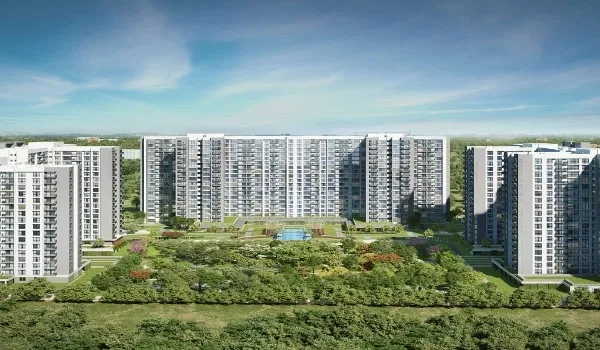
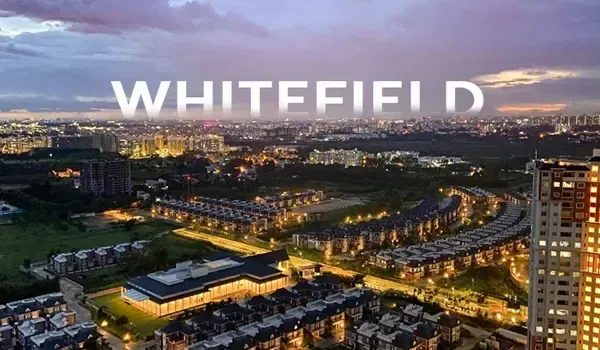
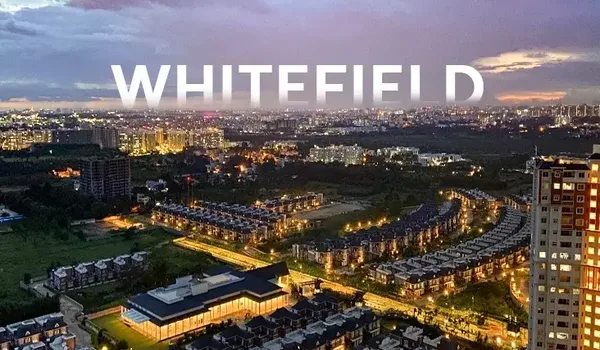
Whitefield averages ~₹13,000 per sq ft in 2026, with the bulk of new launches priced between ₹11,000 and ₹14,000 per sq ft. Metro-adjacent towers — within comfortable walking or last-mile distance of the Namma Metro Purple Line extension stations — are quoting ₹15,000+ per sq ft in select projects. Some Whitefield micro-markets recorded double-digit price growth between 2024 and 2026, reflecting persistently tight inventory and strong end-user demand from IT professionals working in the ITPB, EPIP Zone and RMZ Ecoworld clusters. Godrej Whitefield, a pre-launch apartment project by Godrej Properties on the Whitefield belt, is positioned to serve this demand, offering buyers an opportunity to enter the zone at a pre-launch price point before the official launch targeted by end of 2026. Buyers interested in the Whitefield sub-market should assess project-level RERA filings once available to verify specifications and timelines.
Sarjapur Road Corridor
Sarjapur Road has emerged as one of the highest-conviction appreciation bets in East Bangalore for 2026 and 2027. The corridor benefits from its dual connectivity — to the Outer Ring Road on the north and to Electronic City on the south — and from a concentration of IT campuses and GCC offices that keeps rental demand consistently strong. Analysts broadly expect Sarjapur Road to be among the top-performing corridors for price appreciation through 2026, with a supply pipeline that is still being absorbed at a pace that leaves limited ready inventory available to buyers at any given time. Average rates along the prime Sarjapur Road stretch sit within the East Bangalore zone average of ₹13,000–₹13,750 per sq ft, with premium and large-format projects exceeding this band.
North Bangalore Property Prices 2026
North Bangalore averages ~₹11,150 per sq ft in 2026, making it the most accessible of the four major zones for buyers seeking a credible Bangalore address at a lower entry point than East. The zone encompasses a wide range of sub-markets with meaningfully different price levels and demand drivers.
Hebbal, Thanisandra and Manyata Tech Park Corridor
The Hebbal–Thanisandra–Manyata corridor is the premium end of North Bangalore's residential market. Manyata Tech Park anchors large-scale GCC and IT employer demand in this part of the city, and the proximity to Hebbal flyover and the BIAL Road connectivity has made the area a preferred address for senior professionals working in the park and in the nearby Kirloskar Business Park. Average rates in the best-located projects in this corridor sit above the North Bangalore zone average of ₹11,150 per sq ft, with premium projects in Hebbal and the ORR-adjacent stretches of Thanisandra quoting materially higher.
Devanahalli and Airport Corridor
Devanahalli and the broader Kempegowda International Airport corridor represent the long-runway appreciation story in North Bangalore. Average prices here are currently lower than the zone average — reflecting the longer travel time to the city's core employment nodes — but both the airport's economic activity and the planned infrastructure improvements along the BIAL corridor are widely cited as medium-term appreciation catalysts. Sarjapur Road and Devanahalli are broadly expected to lead citywide appreciation through 2026, making the airport corridor a corridor to watch for buyers with a longer hold horizon who are willing to accept a current liquidity discount in exchange for future upside. Integrated township projects and plotted developments dominate new supply in this micro-market.
South Bangalore Property Prices 2026
South Bangalore occupies a mid-to-premium band in the citywide price spectrum, with a particularly wide variance between sub-markets. Established, land-scarce neighbourhoods such as Jayanagar and JP Nagar command prices that reflect their premium locations, high demand from longstanding residents, and very limited new supply. Further south, Bannerghatta Road and Electronic City offer a wider range of price points, from affordable mid-segment projects to premium gated communities, and continue to attract demand from IT professionals employed in the Electronic City campuses.
South Bangalore's residential market is more heterogeneous than East or North, reflecting the historical build-out of the zone across several decades and planning frameworks. Buyers drawn to South Bangalore typically value established social infrastructure — schools, hospitals, markets — over proximity to the newest IT corridors, and the zone's price trajectory in 2026 reflects steady organic demand rather than the GCC-driven demand surge seen in East Bangalore. Resale market activity in premium South Bangalore neighbourhoods remains strong, and new launches where land becomes available are absorbed quickly at premium rates.
Central Bangalore Property Prices 2026
Central Bangalore commands the highest absolute asking prices in the city for scarce premium residential stock in established addresses such as Indiranagar, MG Road, Lavelle Road and Residency Road. These micro-markets are characterised by very limited new supply — development land is practically unavailable at scale — and a buyer profile that skews toward high-net-worth individuals, NRIs and professionals seeking a premium address with immediate city-centre access rather than IT-corridor proximity. Asking rates in the top end of these corridors reach the upper bound of the citywide range (₹18,500+ per sq ft) for new or recently renovated residential product, with older inventory quoted at a range of prices depending on building condition and floor.
Central Bangalore does not offer the volume or the new-launch pipeline that East Bangalore does, and buyers seeking appreciating residential assets in a liquid, transaction-rich market generally look elsewhere. The zone's appeal is in address value, lifestyle convenience and the relative scarcity of premium residential inventory in a permanently land-constrained geography.
Bangalore Property Appreciation Outlook and Key Drivers 2026
Analysts and public listing data broadly point to ~6–10% further appreciation across Bangalore through the rest of 2026. The headline growth rate masks significant divergence across corridors: Sarjapur Road and the Devanahalli airport corridor are expected to outpace the citywide average, while already-elevated micro-markets within Whitefield and Hebbal may see more moderate incremental gains after the strong 2024–2026 run. Four structural drivers are consistently cited as underpinning Bangalore's continued upward price trajectory.
IT and GCC Employment Growth
Bangalore remains India's primary technology employment hub, and the GCC expansion cycle that began accelerating in 2022–2023 shows no signs of reversing in 2026. New GCC set-ups and existing GCC headcount growth in East and North Bangalore directly translate into housing demand from employees who typically prefer to live within a manageable commute of their office campus. The employment base effect is compounded by the income profile of IT and GCC workers, who tend to be active home buyers and renters in the ₹9,000–₹16,000 per sq ft mid-to-premium product segment.
Metro Network Expansion
The Namma Metro network's ongoing expansion — including the Purple Line extension that now connects Whitefield to central Bangalore, and planned corridors in North and South Bangalore — is progressively extending the zone of metro-adjacency premium pricing. Projects within comfortable last-mile distance of a metro station consistently command a meaningful rate premium over comparable projects further from the network, and this premium has expanded as ridership has grown and commute reliability has improved. Metro connectivity is now a first-tier purchase criterion for a large share of Bangalore homebuyers in 2026.
ORR and PRR Road Infrastructure
The Outer Ring Road and the Peripheral Ring Road programme have materially expanded the practical geography of Bangalore's premium residential market. Corridors that were previously considered peripheral — including parts of Sarjapur Road, the airport ORR stretch in North Bangalore and the Bannerghatta Road extension in South Bangalore — have been brought within acceptable commute range of major employment nodes, widening the buyer base for projects in these areas and supporting land values. The PRR, when complete, is expected to further decongest the ORR and add a new layer of road connectivity benefit to developments in the wider metropolitan region.
Airport Corridor Infrastructure
Kempegowda International Airport's continuing expansion and the infrastructure investments along the BIAL corridor — including widened expressways, the suburban rail project and planned commercial development around the airport — are making Devanahalli and north Bangalore's extended periphery a credible long-term residential address. Airport-adjacent developments offer buyers who can accept a current connectivity trade-off access to price points and land parcels that are not available in the mature corridors of East or inner North Bangalore, with an appreciation thesis driven by infrastructure delivery rather than immediate employment proximity.
Frequently Asked Questions
1. What is the average property price in Bangalore in 2026?
The citywide average asking price in Bangalore in 2026 is approximately ₹12,100 per sq ft, with the full range running from about ₹4,650 per sq ft at the affordable end to ₹18,500+ per sq ft for premium stock in scarce central locations. East Bangalore leads at ₹13,000–₹13,750 per sq ft, while North Bangalore averages around ₹11,150 per sq ft. All figures are indicative for early-to-mid 2026 compiled from public listing portals; verify the rate for a specific project before transacting.
2. How much have property prices risen in Bangalore in 2026?
Bangalore's citywide average asking price rose approximately 14% year-on-year to reach ~₹12,100 per sq ft in early-to-mid 2026. Some East Bangalore micro-markets, particularly on the Whitefield belt, recorded double-digit growth between 2024 and 2026. Analysts broadly forecast a further 6–10% appreciation through the rest of 2026, with Sarjapur Road and Devanahalli corridors expected to outpace the citywide average.
3. Which is the most expensive zone for residential property in Bangalore?
Central Bangalore — covering premium micro-markets such as Indiranagar, MG Road and Lavelle Road — commands the highest absolute asking prices in the city, reaching the top of the citywide range (₹18,500+ per sq ft) for new premium product in these land-scarce addresses. East Bangalore is the highest-volume premium zone at ₹13,000–₹13,750 per sq ft on average and is the most actively tracked and transacted premium market at scale in 2026.
4. Which areas of Bangalore are expected to appreciate the most in 2026?
Sarjapur Road in East Bangalore and the Devanahalli airport corridor in North Bangalore are broadly expected to lead price appreciation through 2026, based on public listing data and analyst commentary. Within East Bangalore, select Whitefield micro-markets have already recorded double-digit growth from 2024 to 2026 and continue to benefit from IT and GCC employment expansion and the Namma Metro Purple Line extension. Devanahalli's appreciation thesis is tied to infrastructure delivery and airport-corridor development over the medium term.
5. Is it a good time to buy property in Bangalore in 2026?
Bangalore's demand fundamentals — IT and GCC employment growth, metro network expansion, improving ORR and PRR infrastructure, and an active airport corridor — remain strong in 2026 and support continued price growth. The citywide average has already risen ~14% year-on-year, so buyers entering now are doing so at elevated prices relative to 2024 levels. Pre-launch or early-stage projects in high-demand zones such as East Bangalore may offer more attractive entry pricing compared to ready-to-move inventory. Buyers should assess their own hold horizon, financing costs and specific project credentials before committing.
6. East Bangalore vs North Bangalore — which offers better investment value in 2026?
East Bangalore averages ₹13,000–₹13,750 per sq ft versus North Bangalore's ~₹11,150 per sq ft, giving North a lower absolute entry point. East has a stronger concentration of IT and GCC employers, more established metro connectivity via the Purple Line, and a track record of double-digit appreciation in select micro-markets. North offers upside from the Kempegowda International Airport corridor, Manyata Tech Park and planned infrastructure, but appreciation there is more dependent on project execution and government investment timelines. Buyers seeking immediate employment proximity and rental demand typically favour East; those prioritising a lower entry price with longer-term airport-corridor upside look at North.
Conclusion
Bangalore's property market in 2026 is defined by zone-led differentiation: East Bangalore commands premium rates and the strongest buyer activity at ₹13,000–₹13,750 per sq ft, North Bangalore offers relative affordability at ~₹11,150 per sq ft with airport-corridor upside, South Bangalore remains a mature market with pockets of strong appreciation in land-scarce neighbourhoods, and Central Bangalore retains the city's highest absolute prices for limited premium supply. The citywide average of ~₹12,100 per sq ft — up ~14% year-on-year — reflects broad-based demand anchored by IT and GCC employment growth, metro network expansion and improving road infrastructure. Forecast appreciation of ~6–10% through the rest of 2026, with Sarjapur Road and Devanahalli expected to lead, makes the current window of significant interest for buyers who can act ahead of further price escalation in the corridors they target. To explore pre-launch opportunities in East Bangalore and schedule a consultation with our team, contact us here.
Godrej Whitefield Blog
More Bangalore and Whitefield market guides.