Home Loan, Stamp Duty & Registration Costs in Bangalore 2026

The sticker price of an apartment is only part of what you actually pay to own a home in Bangalore. Between your home loan, Karnataka's stamp duty slab, the recently revised registration fee and a handful of charges buyers routinely forget, the real outgo runs well above the base cost. This 2026 guide breaks down each layer so you can budget the full purchase, not just the loan EMI, and walk into registration without a surprise.
Figures here are indicative 2026 bands to help you plan; your exact loan rate, guidance value and charges depend on your profile, the property and the lender. Always confirm current numbers with your bank and the sub-registrar before you commit.
The Real Cost of Buying at a Glance (2026)
The table sets out the main cost heads, an indicative 2026 figure and who charges it, so you can see the full stack before you sign anything.
| Cost Head | Indicative 2026 Figure | Paid To / Notes |
|---|---|---|
| Home loan interest | ~7.5% – 9.75% p.a. | Bank / housing finance company |
| Down payment (margin) | ~10% – 25% of value | Your own funds, not financed |
| Stamp duty | 2% / 3% / 5% by slab | Karnataka govt, on registration day |
| Surcharge & cess | ~10% of the stamp duty | Added to stamp duty (BBMP +0.5% cess) |
| Registration fee | 2% of value (revised 2025) | Sub-registrar, on registration day |
| GST (under-construction) | ~1% or 5% of value | Only on under-construction homes |
Indicative 2026 figures; loan rate, guidance value, GST rate and add-on charges vary by profile, property and lender.
Bottom line: plan for the loan EMI plus roughly 12% to 15% of the price in cash for down payment, duty, registration and extras.
Home Loan: Interest, Eligibility and What Sets Your Rate
Home loan rates in 2026 broadly run between about 7.5% and 9.75% a year. Public sector banks tend to advertise the lowest slabs, with the sharpest rates, sometimes near 7.1%, reserved for borrowers with a credit score above 800, while private banks and housing finance companies price a little higher for convenience and speed. The single biggest lever on your rate is your credit score: a score of 750 and above usually unlocks the best advertised slab, so it pays to check and clean up your report before you apply. Lenders also weigh your income stability, existing EMIs and age against the loan tenure. Compare on the effective rate and the processing fee together, since a fee of 0.25% to 1% of the loan can outweigh a small rate difference.
Bottom line: a credit score above 750, a stable income and a low existing-EMI load are what move you into the cheapest rate band.
Loan-to-Value: How Much the Bank Actually Funds
A home loan never covers the entire price. Lenders finance up to about 75% to 90% of the property value depending on the loan size and your profile, and you fund the rest as the down payment or margin money. Crucially, the loan-to-value is calculated on the property value alone, not on stamp duty and registration, which you must arrange separately in cash. For a larger loan the permitted funding percentage typically dips, so a higher-value home needs a proportionally larger down payment. Line up this margin, plus the transaction taxes, well before you book, because a shortfall here is the most common reason a smooth purchase stalls at the last step.
Bottom line: expect to bring 10% to 25% of the price as down payment, and remember the bank funds the home, not the taxes on it.
Stamp Duty in Karnataka: The Slab That Applies
Karnataka charges stamp duty on a value-based slab: roughly 2% for properties below Rs 20 lakh, 3% between Rs 20 and 45 lakh, and 5% above Rs 45 lakh. Since most Bangalore apartments sit above Rs 45 lakh, the 5% band is what the majority of buyers pay. On top of the duty itself, the state adds a surcharge and cess of about 10% of the stamp duty, and for property within BBMP limits there is an extra 0.5% cess. Stamp duty is calculated on the higher of the sale value or the government guidance value for that location, so check the guidance value for your project before you estimate. This is a one-time cost paid on the day of registration.
Bottom line: budget 5% stamp duty plus about 10% surcharge on that duty for a typical Bangalore apartment above Rs 45 lakh.
Registration Fee: The 2025 Revision You Should Know
The property registration fee in Karnataka was revised from 1% to 2% of the property value with effect from 31 August 2025, the first change since 2003, and it applies to residential, commercial and plotted transactions alike. So a purchase that would have cost 1% to register now costs 2%, a meaningful bump on a crore-plus home. Like stamp duty, the registration fee is due in full at the sub-registrar office on the day the sale deed is registered, and it cannot be deferred or paid in instalments. Verify the property's Karnataka RERA registration and clear title before you reach this stage, since registration transfers ownership and is expensive to unwind.
Bottom line: the registration fee is now 2% of value, doubled from 2025, and is payable in full on registration day.
The Hidden Charges Buyers Forget
Beyond loan, duty and registration, several smaller costs add up. On an under-construction home you pay GST, around 1% of value for an affordable unit and 5% for others, though a ready home with its completion certificate attracts no GST. Then come legal and documentation fees, khata registration and transfer, a maintenance deposit and advance maintenance to the builder or society, and, if you take a loan, the processing and valuation charges. Because none of these are financed by the bank, they land as cash outflows around possession and registration. A practical habit is to ask the developer for a full cost sheet, including all one-time and deposit charges, so nothing surfaces late.
Bottom line: keep a cushion for GST on under-construction homes plus legal, khata and maintenance charges, none of which the loan covers.
A Total Cost Example
Take a ready Rs 1 crore apartment in Bangalore. Stamp duty at 5% is Rs 5 lakh, the surcharge at about 10% of that is Rs 50,000, and the registration fee at 2% is Rs 2 lakh, so duty and registration alone come to roughly Rs 7.5 lakh. On top of that you fund the down payment, say 20% or Rs 20 lakh, and set aside legal, khata and maintenance charges. A ready home skips GST, which would otherwise add 1% or 5% on an under-construction purchase. The lesson is simple: on a Rs 1 crore home, plan for close to Rs 27 to 28 lakh in cash beyond the loan once the down payment and transaction costs are counted.
Bottom line: on a Rs 1 crore ready home, duty and registration run about Rs 7.5 lakh, and total upfront cash beyond the loan is roughly Rs 27 to 28 lakh.
A Gated Option to Budget For
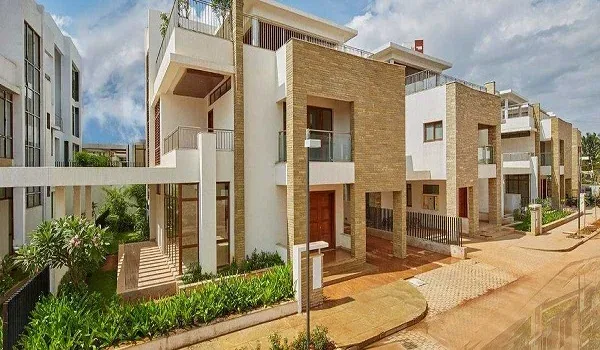
If you are working these numbers for a home on the East Bangalore IT belt, our pre-launch Godrej Whitefield in Whitefield is a gated community from Godrej Properties, a listed developer. As a pre-launch project it can be an accessible entry point, and its team can share a full cost sheet, including all duty, registration and deposit heads, so you can budget the complete outgo rather than just the base price.
Bottom line: ask any developer, ours included, for a complete cost sheet so your budget reflects the true all-in price, not the headline rate.
Frequently Asked Questions
1. What are home loan interest rates in Bangalore in 2026?
Home loan rates in 2026 broadly sit between about 7.5% and 9.75% a year, with public sector banks starting lowest and the sharpest slabs reserved for borrowers with a credit score above 750. Your exact rate depends on your profile, loan amount and the lender.
2. What is the stamp duty on an apartment in Bangalore in 2026?
Karnataka charges stamp duty on a slab: about 2% below Rs 20 lakh, 3% between Rs 20 and 45 lakh, and 5% above Rs 45 lakh, plus surcharge and cess on the duty. Most Bangalore apartments fall in the 5% band.
3. How much is the property registration fee in Bangalore now?
The registration fee was revised from 1% to 2% of the property value with effect from 31 August 2025, the first change since 2003. It applies to residential, commercial and plotted transactions across Karnataka.
4. Does a home loan cover stamp duty and registration?
No. Banks do not include stamp duty and registration in the sanctioned loan amount, so you must arrange this cash separately. On the day of registration the full amount is due at the sub-registrar office and cannot be split into instalments.
5. How much cash do I need beyond the loan to buy in Bangalore?
Budget for the down payment of roughly 10% to 25% of value, plus around 6% to 7% for stamp duty, surcharge and registration, plus GST on under-construction homes and smaller charges like legal and khata. A useful rule is to keep 12% to 15% of the price ready in cash on top of the loan.
6. Can I save on stamp duty by registering in a woman's name?
Karnataka does not currently offer a separate lower stamp duty slab for women buyers as some states do. The clearest levers to reduce cost are registering at the correct guidance value and comparing lenders on rate and processing fee.
Conclusion
Buying a home in Bangalore in 2026 means budgeting four layers, not one: the home loan at roughly 7.5% to 9.75%, a down payment of 10% to 25%, Karnataka stamp duty of up to 5% plus surcharge, and the registration fee now revised to 2%. Add GST on under-construction homes and the smaller legal, khata and maintenance charges, and a sensible rule is to keep 12% to 15% of the price in cash beyond the loan. Confirm your guidance value, compare lenders on rate and fee, and verify title and RERA before registration. To budget a specific gated Godrej home end to end, contact us here.
Godrej Whitefield Blog
More Bangalore market guides.