Godrej Properties Sustainability & Green Building Features 2026
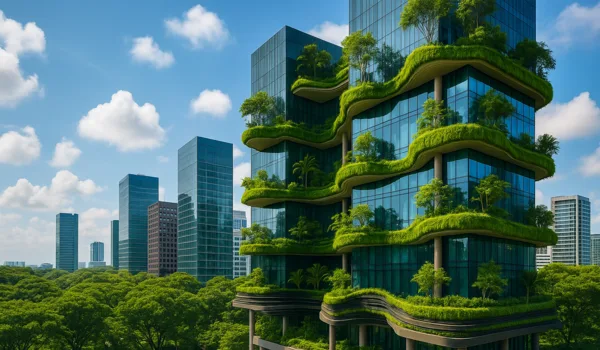
Green building has moved from a marketing badge to a running-cost decision. A home that is designed to use less power and water costs less to live in every month, ages better, and tends to hold its value, which is why a buyer should look past the brochure adjectives and ask what a project actually does. This 2026 guide sets out the sustainability record of Godrej Properties in Bangalore: the green credentials the developer holds, the eco features you will find inside a Godrej home, what they save you, and the checks worth making before you buy. Figures here are indicative and vary by project.
Why Green Building Is a Buyer's Concern, Not Just the Planet's
It is easy to file sustainability under good intentions and move on, but the payoff is practical. A well-designed green home draws less grid power for common areas, recycles a large share of its water, and stays cooler with better orientation and materials, so your monthly outgoings are lower. Certified projects also tend to be built and maintained to a tighter standard, which shows up as fewer problems later and a stronger resale story. In short, green is where lower bills, better living conditions and durable value overlap.
Sustainability at a Glance (2026)
The table below summarises the green features that shape day-to-day living and cost in a certified project, so you can see the whole picture before the detail.
| Green Feature | What It Means for You |
|---|---|
| Green certification (IGBC / LEED) | An independent grade on energy, water and materials; a higher level signals lower running costs |
| Rainwater harvesting & water recycling | Treated water reused for landscaping and flushing, cutting fresh-water demand |
| Solar-assisted & energy-efficient design | Lower common-area power draw and cooler homes through better orientation and materials |
| EV-charging provision | Ready wiring and points for electric vehicles as the city shifts to EVs |
| Native landscaping & open space | Low-water planting, shade and biodiversity within the community |
| Waste segregation & management | On-site sorting and, where provided, organic-waste processing to cut landfill load |
Indicative features for 2026; the exact green specification and certification level vary by project and are confirmed at RERA filing.
Godrej's Green Credentials
Godrej Properties has one of the stronger sustainability records among listed Indian developers. In 2025 it was ranked the number-one residential developer worldwide by the Global Real Estate Sustainability Benchmark, scoring a perfect 100 for its environmental, social and governance practices. The company reports that its full portfolio is certified or under certification for a recognised green rating, that every project launched since 2021 targets an IGBC or LEED standard, and that it operates as a water-positive and carbon-neutral organisation for its direct emissions, with a validated long-term net-zero commitment. For a buyer, credentials at this level are a reasonable proxy that green design is standard practice, not an add-on.
Green Certifications Explained
Three names come up most often, and it helps to know what each grades. IGBC, run by the Indian Green Building Council, rates a project on energy, water, materials and indoor quality and awards Certified, Silver, Gold or Platinum, with Platinum the top tier. LEED is the international equivalent, widely recognised and structured similarly. GRIHA is a national rating that assesses how eco-friendly a building is across its whole life cycle. You do not need to memorise the scoring; what matters is that an independent body has verified the claims, and that a higher tier generally points to lower running costs and a smaller footprint.
Green Features You Will Actually Live With
Certifications are earned through features you use every day. Rainwater harvesting captures monsoon runoff to recharge groundwater, while a sewage treatment plant recycles waste water so treated water can be reused for gardens and flushing instead of drawing on the mains. Solar-assisted common-area lighting and energy-efficient pumps and fixtures trim the shared electricity bill that every resident funds through maintenance. Thoughtful orientation, shading and better glazing keep homes cooler and cut air-conditioning load. EV-charging provision future-proofs your parking, and native, low-water landscaping keeps the greenery alive without heavy irrigation. Waste segregation, and organic-waste processing where provided, reduces what the community sends to landfill.
What Green Design Saves You
The saving is real but should be described honestly. Efficient design, recycled water and solar-assisted common services can reduce a project's energy and water use by roughly a fifth to a third against a conventional build, and that flows through to lower common-area maintenance and, in your own flat, a smaller cooling bill. A certified home may carry a modest upfront premium, but over a long ownership period the running-cost gap and the stronger resale position usually offset it. Treat any single savings percentage you are quoted as indicative, because the real number depends on how the building is run and how you use your home.
What to Check Before You Buy
Do not take green on trust; verify it. Ask which certification the project holds or targets and at what tier, and get it in writing rather than as a sales line. Confirm the specifics that affect your bills, the sewage treatment plant capacity and water-reuse setup, solar provision, and EV points, since these vary widely between projects. Check that the project is registered on the official Karnataka RERA portal, where the registration and approved plans are on record. Finally, remember that a certification target on a pre-launch project is confirmed only at RERA filing, so keep expectations tied to what is documented.
The Green Angle at Godrej Whitefield
The pre-launch Godrej Whitefield in Whitefield is expected to follow the developer's standard green-building approach, the same rainwater harvesting, water recycling, energy-efficient common services and EV-ready parking seen across Godrej's Bangalore portfolio, with the specific certification and tier confirmed at the official launch. For a buyer in a maturing East Bangalore IT corridor, a green-designed community is not just an environmental preference; it is a hedge on running costs and resale in a market where certified stock is steadily becoming the norm.
Frequently Asked Questions
1. Are Godrej Properties projects green certified?
Yes. Godrej Properties reports that its full portfolio is certified or under certification for a recognised green-building rating, and every project since 2021 has targeted an IGBC or LEED standard.
2. What is IGBC certification?
IGBC is the Indian Green Building Council rating that grades a building on energy, water, materials and indoor quality, awarding Certified, Silver, Gold or Platinum levels. A higher level signals lower running costs and a smaller environmental footprint.
3. Do green homes cost more to buy?
A certified green home may carry a modest upfront premium, but it is designed to cost less to run through lower power and water bills. Over a long ownership period the savings usually offset the difference.
4. How does a green building save money?
Efficient design, recycled water and solar-assisted common areas can cut a project's energy and water use by roughly a fifth to a third versus a conventional build. That shows up as lower monthly bills and maintenance for residents.
5. What green features does a Godrej apartment have?
Typical features include rainwater harvesting, a sewage treatment plant with treated-water reuse, solar-assisted common lighting, EV-charging provision, energy-efficient design and native landscaping. The exact mix varies by project.
6. Will Godrej Whitefield be a green project?
Godrej Whitefield is expected to follow the developer's standard green-building approach, with the specific certification confirmed at launch. As with any pre-launch, the final rating is set at RERA filing.
Conclusion
Sustainability at Godrej is less a slogan than a standard: a top global ESG ranking, a portfolio built to IGBC or LEED levels, and everyday features, water recycling, solar-assisted services, EV-ready parking and native landscaping, that quietly lower what a home costs to run. For a buyer, that translates into smaller monthly bills, better living conditions and a stronger resale position as certified stock becomes the market norm. Verify the certification and its tier in writing, check the RERA record, and treat any single savings figure as indicative. To explore a green Godrej project that fits your budget and running-cost goals, contact us here.
Godrej Whitefield Blog
More Godrej Properties and Bangalore market guides.
 Godrej Properties in Bangalore 2026: Projects & Track Record
 Godrej Properties Amenities & Specifications 2026
 Godrej Construction Quality & Delivery Track Record 2026
 Godrej Resale Value & Exit Guide 2026
 Godrej Properties Investment Guide: ROI & Rental Yield 2026
 Bangalore Real Estate: Prices, Zones & Top Projects 2026