NRI Guide to Buying an Apartment in Whitefield 2026

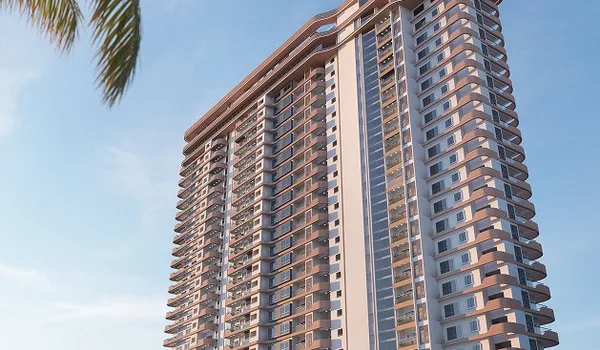
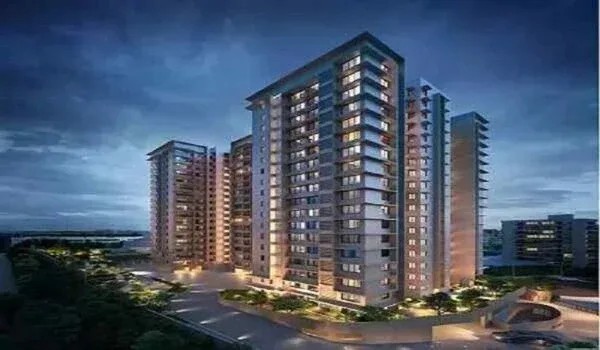
NRIs and OCIs can buy residential apartments in Whitefield under FEMA without RBI approval, paying through NRE/NRO accounts or inward remittance in Indian rupees. Godrej Whitefield by Godrej Properties in Whitefield is one project drawing strong NRI interest, owing to the area's deep IT-belt tenant pool and an indicative rental yield of ~4–4.5%.
NRI Buying in Whitefield 2026 — Quick Facts
| Topic | Rule |
|---|---|
| Who can buy | NRI / OCI / PIO |
| Allowed property | Residential & commercial (NOT agricultural land, plantation or farmhouse) |
| Payment | NRE / NRO account or inward foreign remittance; no cash |
| PAN | Mandatory for registration & tax |
| Remote purchase | Allowed via Power of Attorney (PoA) |
| Rental yield (Whitefield) | ~4–4.5% (indicative) |
Rules and rates are indicative for 2026 — confirm the current FEMA/RBI and tax position with a qualified advisor before you transact.
Who Qualifies and What You Can Buy
Three categories of overseas buyers qualify to purchase property in India freely:
- NRI (Non-Resident Indian): an Indian citizen who has resided outside India for more than 182 days in a financial year.
- OCI (Overseas Citizen of India): a foreign national of Indian origin holding an OCI card issued by the Government of India.
- PIO (Person of Indian Origin): treated on par with NRIs for property purchase; the PIO card scheme was merged with OCI in 2015, so most PIOs now hold OCI cards.
All three categories may freely purchase residential and commercial properties anywhere in India, including Whitefield, Bangalore, without prior RBI approval under the Foreign Exchange Management Act (FEMA). What they are not permitted to buy — without special RBI permission, which is rarely granted — are agricultural land, plantation property, and farmhouses.
Payment & FEMA Rules
Under FEMA, all payments for property by an NRI must flow through banking channels in Indian rupees. The three permitted routes are:
- NRE account (Non-Resident External): rupee-denominated, fully repatriable, funded from overseas earnings.
- NRO account (Non-Resident Ordinary): rupee-denominated, holds India-source income; repatriation is capped at an indicative limit of USD 1 million per financial year — verify the current RBI circular before transacting.
- Inward foreign remittance: funds transferred from abroad through a recognised banking channel and converted to Indian rupees at the time of credit.
Cash payments, traveller's cheques, and direct foreign-currency drafts are not permitted for property registration. If an NRI avails a home loan from an Indian bank or NBFC, the EMIs can be serviced from either the NRE or NRO account, and the loan amount counts as locally sourced funds for payment purposes.
Documents Checklist
The following documents are typically required at the time of booking and registration:
- Valid Indian passport (for NRI) or OCI card (for OCI holder)
- Current visa or residency permit of the country of residence
- PAN card — mandatory for registration and tax compliance
- Overseas address proof (recent utility bill, bank statement, or government-issued identity card)
- Passport-size photographs
- Bank account statement evidencing the NRE/NRO funds or inward remittance used for payment
- Power of Attorney document, if the purchase is being completed remotely through a representative
Requirements may vary slightly by developer and Sub-Registrar office — confirm the final checklist with the developer or your legal advisor before booking.
Taxes for NRI Buyers
Tax obligations for NRIs owning property in India cover two stages: holding and exit.
Rental income: Rent received on a Whitefield apartment is taxable in India at the applicable NRI slab rates. The tenant (if a company or an individual required to deduct TDS) must deduct tax at source at 30% of the gross rent, plus applicable surcharge and health & education cess, before remitting the balance to the landlord.
Capital gains on resale:
- Long-term capital gains (LTCG): if the property is held for more than 24 months, LTCG is taxed at ~20% plus applicable surcharge and cess, with the indexation benefit on the cost of acquisition. The buyer is required to deduct TDS at ~20% plus surcharge and cess on the sale consideration at the time of registration.
- Short-term capital gains (STCG): if held for 24 months or less, gains are taxed at the applicable income-tax slab rate, which is typically higher than the LTCG rate.
Repatriation: Sale proceeds from an NRO account can be repatriated up to an indicative limit of USD 1 million per financial year — verify the current RBI position. Proceeds channelled through an NRE account are freely repatriable. Retain original Foreign Inward Remittance Certificates (FIRC) as proof of the overseas funds used at the time of purchase.
DTAA relief: India has Double Taxation Avoidance Agreements with many countries. Depending on the NRI's country of residence, treaty relief may reduce the effective tax burden on rental income or capital gains. Consult a chartered accountant or tax advisor before transacting.
Buying Remotely via Power of Attorney
An NRI is not required to travel to India to complete a property purchase. A Power of Attorney (PoA) authorises a trusted resident — typically a family member or a qualified lawyer — to act on the NRI's behalf at every stage of the transaction.
The general process is:
- Draft the PoA clearly specifying the powers granted: signing the sale agreement, making stamp-duty and registration payments, and registering the sale deed at the Sub-Registrar's office.
- Get the PoA notarised before a notary public in the country of residence.
- Have it apostilled (for countries that are parties to the Hague Apostille Convention) or attested by the Indian Embassy or High Commission in that country.
- Send the original apostilled/attested PoA to the PoA holder in India for adjudication at the local Sub-Registrar's office.
- The PoA holder completes the booking, sale agreement, and registration formalities on the NRI's behalf.
The PoA remains valid as long as the principal (the NRI) is alive and has not revoked it. It can be cancelled at any time by sending a written revocation notice and, where the original was registered, by registering a cancellation deed at the Sub-Registrar's office.
Why NRIs Choose Whitefield
Whitefield is home to ITPL, EPIP Zone, and dozens of global technology campuses, which together create one of Bangalore's deepest and most stable corporate tenant pools. This sustained demand translates to indicative rental yields of ~4–4.5% — among the higher bands in Bangalore — and steady resale depth as IT professionals and expats cycle through multi-year assignments.
For NRI investors, the combination of rupee-denominated rental income, potential for long-term capital appreciation, and a liquid secondary market makes Whitefield a practical entry point into Indian real estate. The metro connectivity extending through the corridor further supports the long-term demand thesis.
Before booking any project, verify its Karnataka RERA registration number on the state portal to confirm legal compliance, approvals, and registered possession timelines. For unit sizes, configuration mix, and indicative pricing, visit the price details page.
Frequently Asked Questions
1. Can an NRI buy an apartment in Whitefield?
Yes. NRIs, OCIs, and PIOs can purchase residential apartments in Whitefield under the Foreign Exchange Management Act (FEMA) without seeking prior approval from the Reserve Bank of India. Payment must be made through NRE or NRO accounts or via inward foreign remittance converted to Indian rupees.
2. Can NRIs buy agricultural land in Bangalore?
No. FEMA prohibits NRIs, OCIs, and PIOs from purchasing agricultural land, plantation property, or farmhouses in India without special RBI permission, which is rarely granted. Only residential and commercial properties are freely available to NRI buyers.
3. How does an NRI pay for property in India?
An NRI must pay through banking channels only — using an NRE account, an NRO account, or inward foreign remittance converted to Indian rupees. Direct cash payments, traveller's cheques, and foreign-currency drafts are not permitted for property registration in India.
4. Does an NRI need to be in India to buy a flat?
No. An NRI can appoint a trusted resident as a Power of Attorney (PoA) holder, authorised to sign the sale agreement, pay stamp duty, and register the sale deed on the NRI's behalf. The PoA must be notarised and either apostilled or attested by the Indian Embassy in the NRI's country of residence before it is valid in India.
5. Is rental income from a Whitefield flat taxable for an NRI?
Yes. Rental income received from a property in India is taxable in India at the applicable NRI income-tax slab rates. The tenant is required to deduct TDS at 30% plus applicable surcharge and health & education cess on the gross rent before remitting the balance to the NRI landlord. DTAA relief may apply depending on the NRI's country of residence.
6. Is PAN mandatory for an NRI buying property?
Yes. A Permanent Account Number (PAN) card is mandatory for property registration, for filing income-tax returns on rental income, and for the buyer to deduct TDS at the correct rate at the time of resale. NRIs who do not yet hold a PAN can apply through Form 49A or via the online NSDL/UTI portal.
Conclusion
Whitefield's combination of deep IT-belt tenant demand, indicative yields of ~4–4.5%, and a transparent RERA framework makes it one of the most accessible entry points for NRI property investment in India. With FEMA compliance allowing purchase without RBI approval, a Power of Attorney enabling remote registration, and NRE/NRO accounts covering payment, the process is more straightforward than many NRIs expect. To explore unit configurations, floor plans, and current indicative pricing for a compliant, RERA-registered project on the Whitefield IT belt, schedule a call with the Godrej Whitefield team.
Godrej Whitefield Blog
More Whitefield project and market guides.